
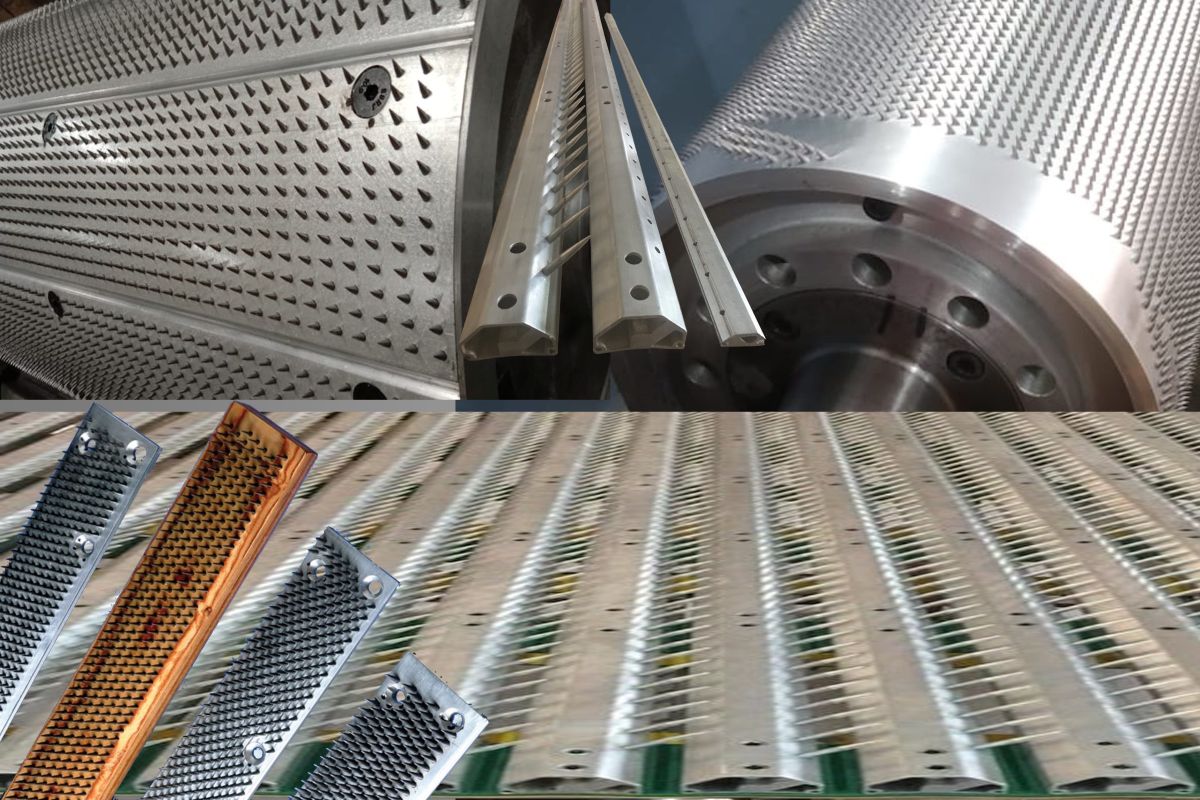
What we supply
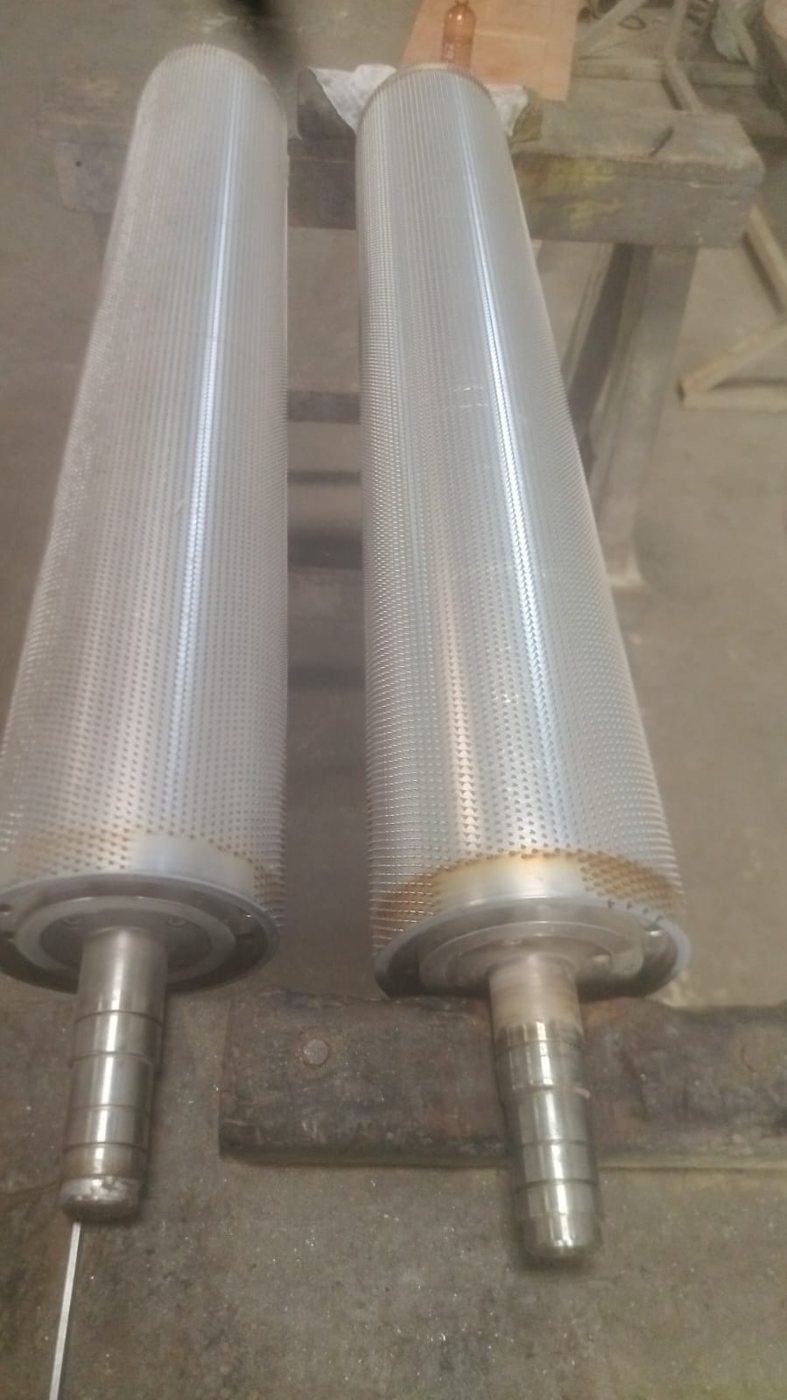
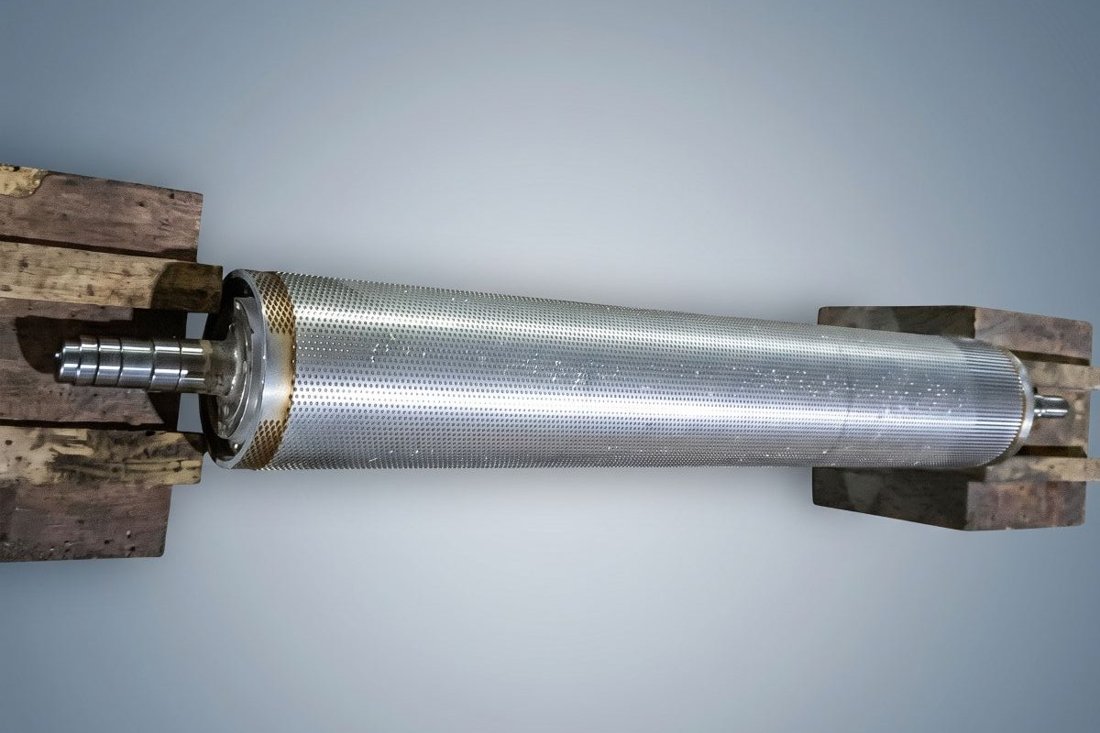
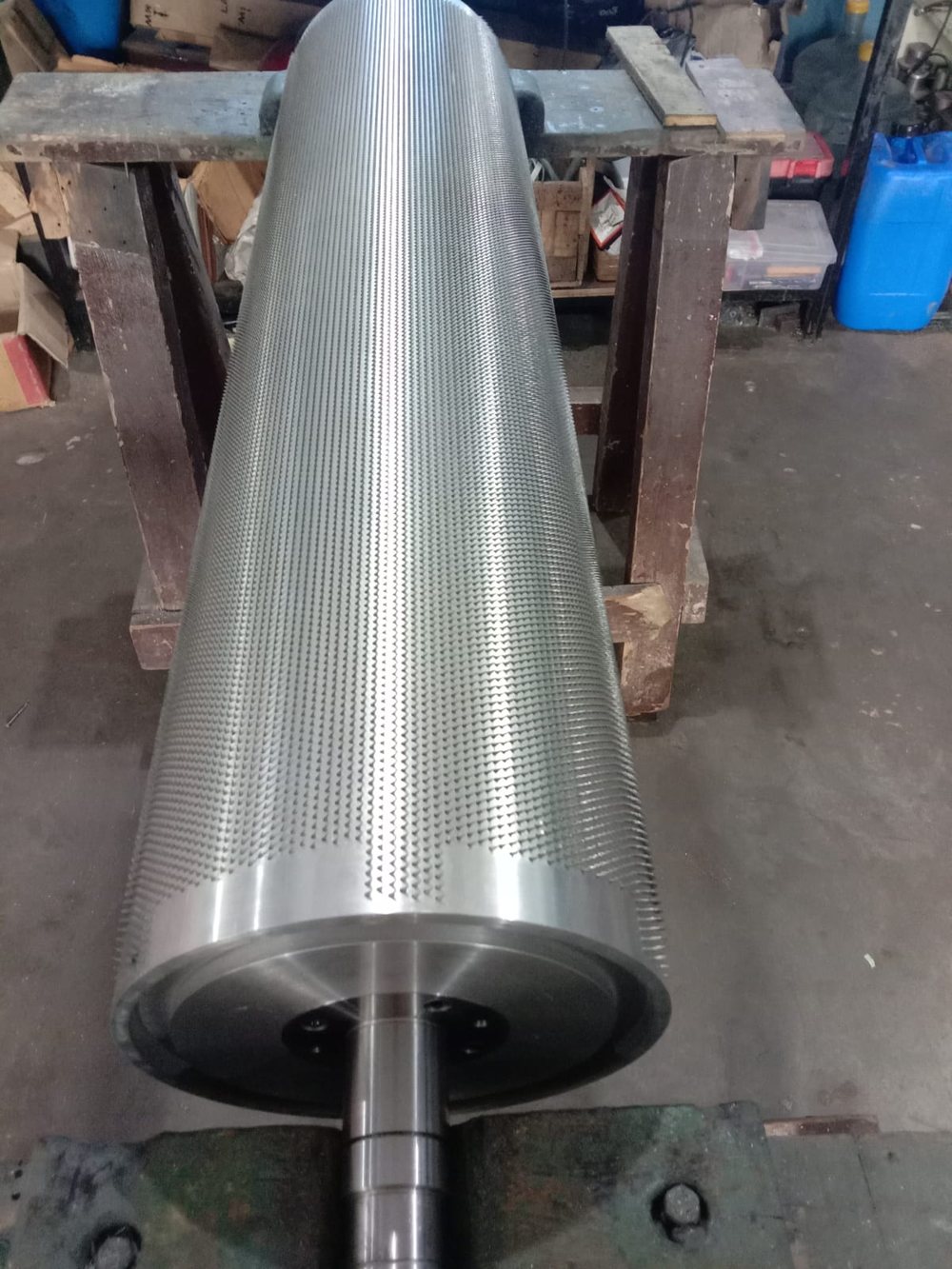
- Blowroom pinned rollers and chute beater pin rollers
- Chute opener pinned rollers for chute-feed systems
- Pinned licker-in rollers (pinned taker-in rollers) model-wise for common cards
- Pinned segments and pinned lattices
- Re-pinning service: licker-in roller re-pinning and blowroom roller re-pinning on your existing roller bodies
Application area
Blowroom lines, chute feed systems and cards in short-staple spinning. Pinned roller duty is position-specific: a chute opener roller works gently on flocks, a blowroom beater works against higher trash, and the pinned licker-in works at high speed directly on the feed fringe. Pin diameter, point profile, working angle and density are therefore confirmed per machine model and position.
Machine compatibility
Typical enquiry contexts: blowroom beater and chute-feed positions (CVT, Unimix and similar lines), chute opener rollers, and pinned licker-in rollers for Trützschler DK and TC series cards. Re-pinning is quoted against the actual roller.
What Vaamana checks before supply
- Pin specification — diameter, length, point profile and working angle against the design
- Pin density and pattern (rows, pitch) for the position
- Pin anchorage — pull-out and bend resistance
- Roller runout and balance after pinning
- Body condition on re-pinning jobs: seat wear, cracks, previous repair quality
Information required from the mill
- Machine make, model and position of the roller (e.g. chute opener, beater, licker-in)
- Roller dimensions: working width, diameter, shaft/end details
- For re-pinning: whether the original pin specification is known, or roller to be sampled
- Fibre being processed and current opening/quality complaint if any
- Photos of pin condition and roller ends, where available
Common failure symptoms
Mills usually reach this page while investigating one of the following. If any of these match, mention it in your enquiry — it changes what we check first.
- Bent, hooked or missing pins visible on the roller surface
- Uneven flock opening or feed across the working width
- Rising nep or short-fibre generation after the opening line
- Vibration on the roller drive at running speed
- Fibre wrapping on the roller at specific positions
Frequently asked questions
When is re-pinning appropriate, and when should the roller be replaced?
Re-pinning is appropriate when the roller body, shaft and pin seats are sound and only the pins are worn or damaged. If the body shows seat wear, cracks or runout that cannot be corrected, re-pinning transfers the defect to the new pins and replacement is the correct decision. We assess the body before committing to a re-pinning job.
Do you match the original pin specification during licker-in roller re-pinning?
Yes. Pin count alone does not define the roller — diameter, point profile, working angle and pattern all carry the OEM design intent. Where the original specification is unknown, we measure the existing pinning and confirm the target specification with you before work starts.
Can you supply pinned rollers for machines no longer supported by the OEM?
Usually yes, working from the roller itself or a drawing. Legacy blowroom and chute-feed rollers are a regular part of this work; the roller is measured, the pinning specification is documented, and the new or re-pinned roller is checked for runout and balance before dispatch.
Photos
Related products and reading
Send an enquiry
Share your machine make and model, the component position, and the current problem if the enquiry is problem-driven. Specification is confirmed before quoting — that is the point of working with Vaamana.
Request a Technical Quote WhatsApp: +91 70104 83377 sss@vaamanacorp.com vaamanac@gmail.com
Vaamana Corporation is an independent supplier and service provider. Machine brand names are used only to identify compatibility, application or customer enquiry context. Vaamana is not affiliated with or endorsed by the respective OEMs unless expressly stated.