Executive Summary
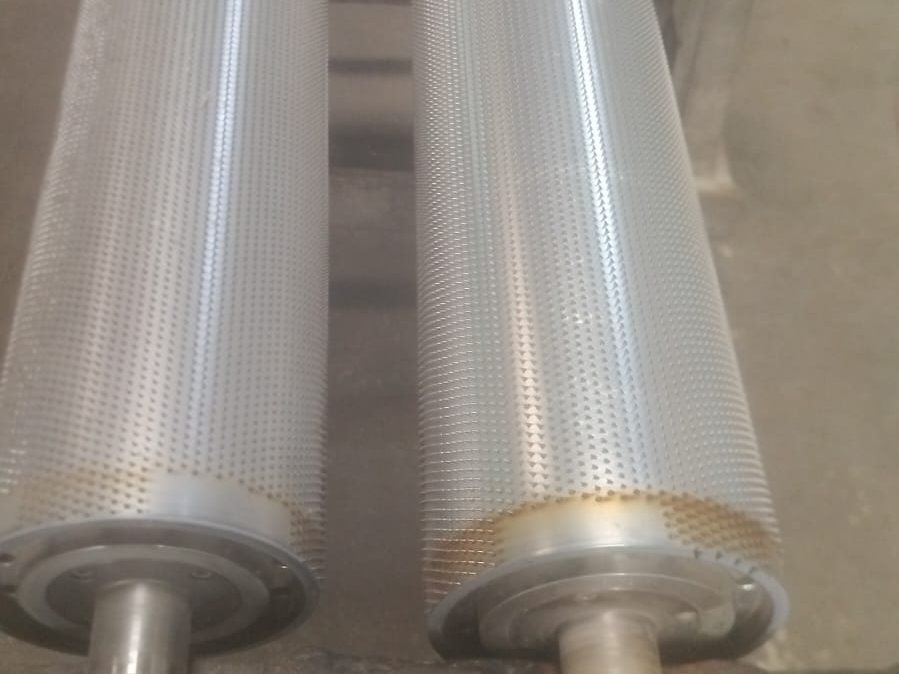
Re-pinning restores a worn pinned roller to its working condition without replacing the roller body — when the body deserves it. The decision is made or lost at inspection, before any pin is pulled. A roller re-pinned onto a tired body carries the old faults into new pins; a roller replaced when re-pinning would have served wastes money. This note sets out what to inspect on blowroom pinned rollers, chute opener and chute beater rollers, pinned segments and pinned licker-in rollers before deciding, and when re-pinning (also written repinning or re pinning) is the wrong answer.
Where Pinned Rollers and Pinned Segments Work
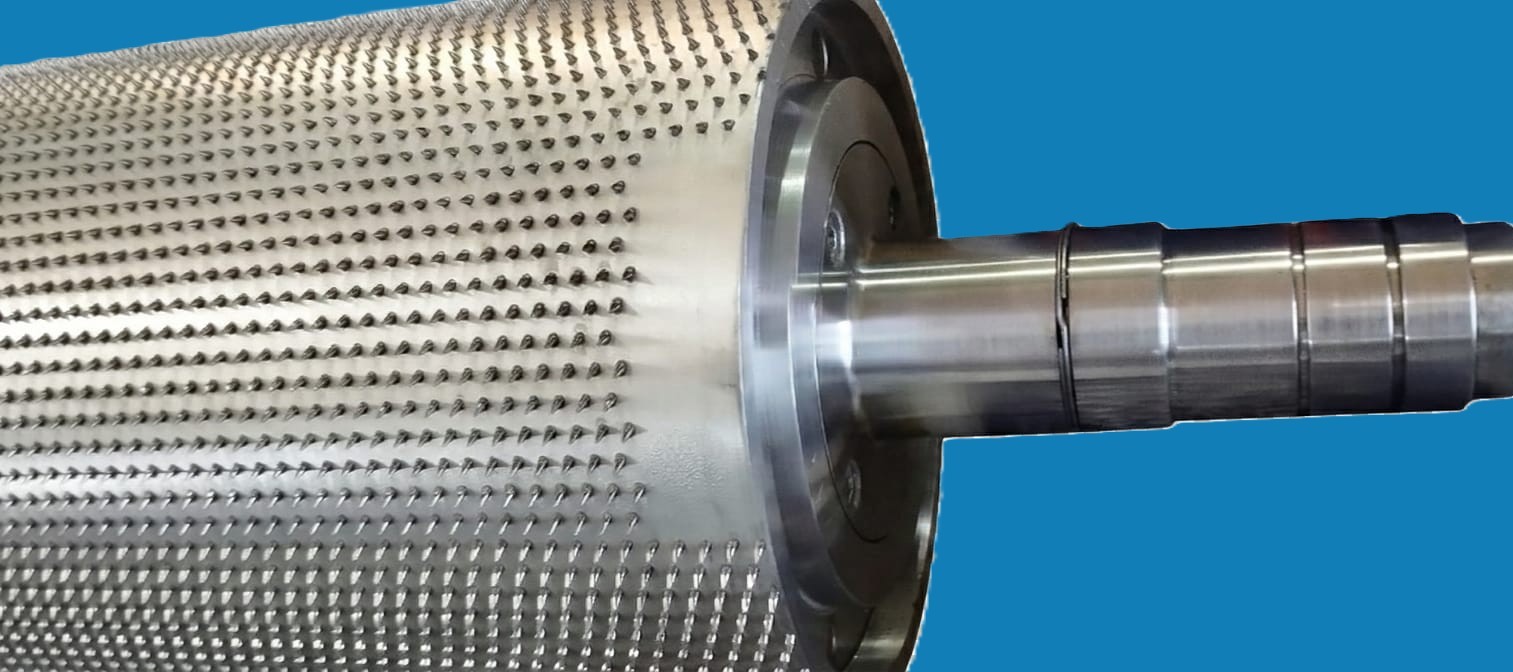
Pinned interfaces do the first mechanical opening work in the line. Blowroom beater rollers strike tufts against grids at high trash load; chute opener rollers work gently on flocks in the chute-feed system, where the aim is even feed rather than aggressive opening; pinned segments and lattices carry and present material between stages; and the pinned licker-in takes the feed fringe directly at the card, at the highest surface speed of them all. Same family of hardware, very different duties — which is why one inspection checklist applied blindly across positions produces bad decisions.
Why Re-Pinning Is Not Only Replacing Pins
The pins are the visible half of the job. The working half is everything the pins depend on: seat integrity in the body, the pinning pattern that spaces the work across the width, the pin specification that sets opening intensity, and the roller's ability to run true at speed once several thousand new pins have changed its mass distribution. A re-pinning job is really four jobs — body assessment, pin specification, pinning execution, and final truing — and the first one decides whether the other three are worth doing.
What to Inspect Before Deciding
Before anything else, establish three facts: what the roller is (machine, position, and whether it has been re-pinned before), what it is doing wrong (the complaint that raised the question), and what it should be (the original pin specification, if known). A surprising number of rollers arrive for re-pinning with none of the three recorded. The inspection below fills the gaps.
Roller Body Condition
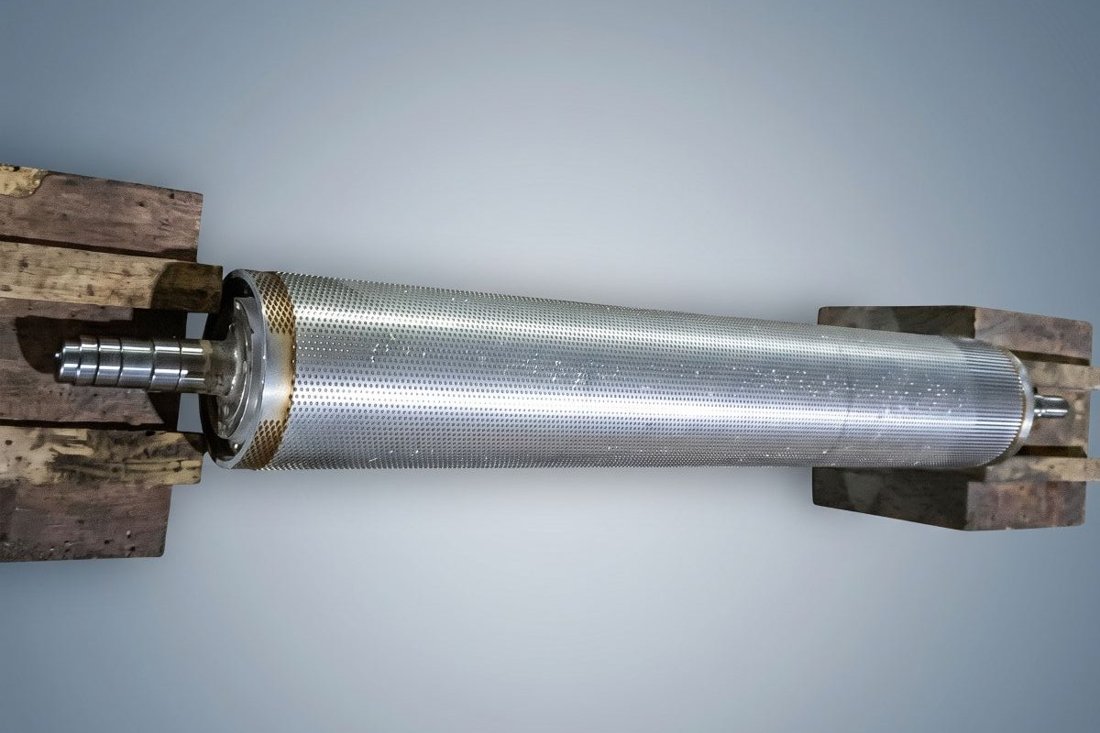
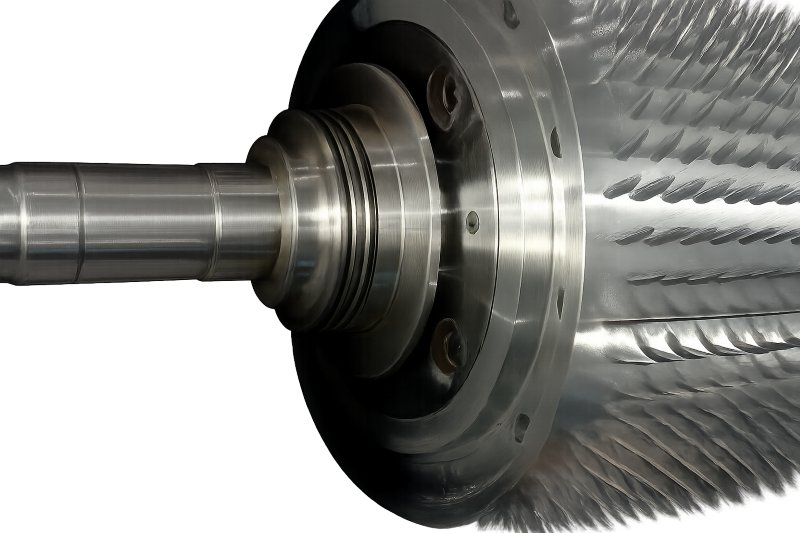
A licker-in roller with pins stripped: at this stage the seats, body surface and runout — not the pins — decide whether re-pinning is approved.
- Pin seats. Enlarged, ovalled or cracked seat holes are the single most common disqualifier. New pins in worn seats loosen under vibration — the failure returns in weeks, now with loose pins travelling downstream.
- Body surface. Corrosion pitting, previous weld repairs and wear ridges between pin rows all telegraph through to the new pinning.
- Shaft and journals. Bearing seats, keyways and shaft straightness. A bent shaft makes a perfectly pinned roller run out.
- Runout and balance history. Measure before stripping. A body that cannot be brought within runout tolerance empty will not improve with pins in it.
- Previous re-pinning quality. Mixed pin types, filled and re-drilled seats, or brazing repairs indicate the body is on its second or third life already — budget accordingly.
Pin Specification: Height, Angle, Profile, Density and Pattern
Matching pin count alone is the classic re-pinning mistake. The working specification has five parts, and each one carries design intent:
- Height above the body sets the working depth into the material.
- Angle (lean in the direction of rotation) sets how the pin strikes and releases — two degrees changes the character of the opening.
- Point profile decides whether the pin combs or snatches; a blunter taper grips later and releases earlier.
- Density and diameter together set intensity and pin stiffness. A thinner pin at the same count deflects more at speed.
- Pattern (row pitch and stagger) distributes the work across the width; the same count in a different pattern loads the fringe unevenly.
Where the original specification is unknown, the existing pinning is measured and documented before stripping — worn pins still hold the geometry, and once they are pulled the evidence is gone.
Chute Opener and Chute Beater Roller Checks
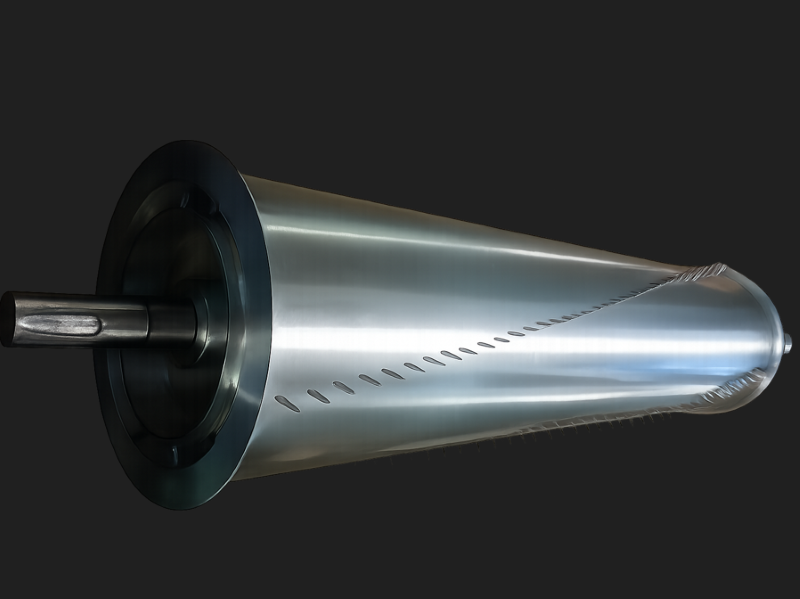
Chute rollers fail differently from beaters. Their duty is gentle and their symptom is unevenness, not breakage: look for pin wear concentrated where the flock stream runs, polished pin flanks (a sign of glazing rather than opening), and wrap marks at positions where fibre has lapped repeatedly. On chute beater rollers, check the grid-facing arc for hooked or bent pins from tramp material — and if tramp damage is recurring, say so with the enquiry, because pin material and profile can be chosen with that in mind. Verify the roller still meters evenly across its width: an unevenly worn chute roller shows up as blend or feed variation downstream, and re-pinning fixes it only if the body has not worn unevenly too.
Pinned Licker-in Roller Checks
The licker-in works at high surface speed directly on the feed fringe, so tolerances that pass in the blowroom fail here. Check runout with particular care — at licker-in speed, small eccentricity becomes a periodic disturbance in fibre presentation to the cylinder. Inspect the leading rows hardest; they take the fringe first and wear first. Confirm the pin specification against the card model rather than against "what fits", and check the roller ends and driving elements: a licker-in that has run hot at the bearings may have moved dimensionally. After re-pinning, this roller above all must be trued and balanced as an assembly before it goes back on the card.
When Re-Pinning Is Not Recommended
- Seat wear or cracking that re-drilling cannot recover without weakening the body.
- Runout that persists with the roller stripped — the fault is in the body or shaft, not the pins.
- Bodies on their third or later pinning where seat integrity is already marginal.
- Corrosion or previous repairs that make pin anchorage unpredictable.
- Cases where the pin specification cannot be established and the position is quality-critical — measuring a sample roller first is cheaper than guessing.
In these cases a new roller against the documented specification is the honest recommendation, and the old body is better retired than resold.
Information Required from the Mill
Machine make, model and the roller's position; roller dimensions (working width, diameter, shaft ends); whether the original pin specification is known or the roller should be measured; the complaint that prompted the enquiry; photos of the pin condition and both roller ends; and whether tramp-material damage is a recurring problem at that position.
What Vaamana Checks Before Accepting the Job
Body and seat condition against the criteria above — a re-pinning order is not accepted on a body that will not carry it. The existing pinning is measured and the target specification agreed in writing before stripping. After pinning: pin anchorage (pull and bend), height and angle consistency across the width, and runout and balance of the finished roller. The same discipline applies to new pinned rollers and re-pinning work alike: the specification, not the pin count, is what gets reproduced.
Related Products and Services
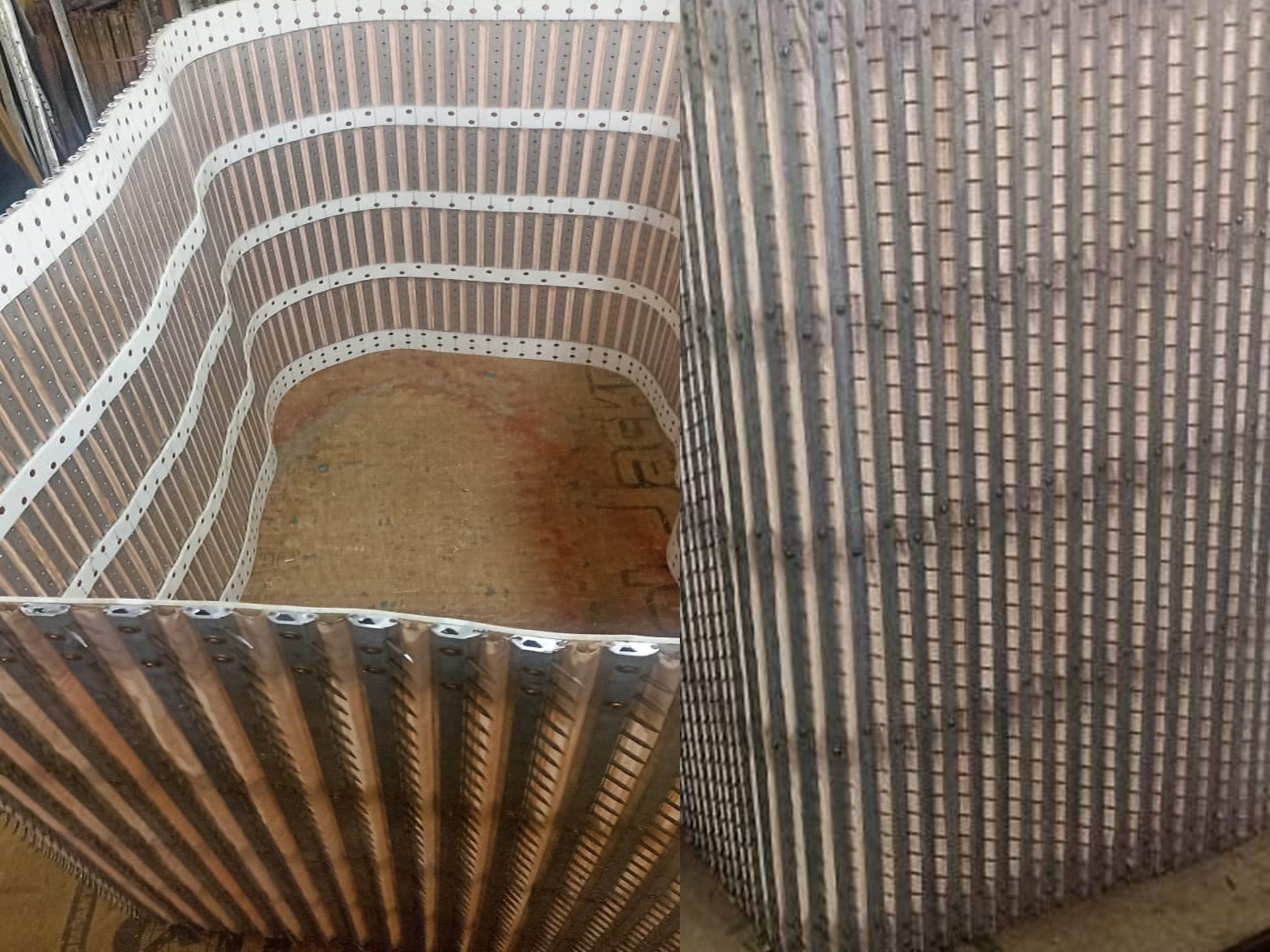
Pinned licker-in rollers, chute opener rollers, blowroom pin beaters and pinned lattices are covered on the pinned rollers & re-pinning page, with model-wise detail on the individual product pages.
FAQ
How many times can a roller be re-pinned?
There is no fixed number — it is decided by seat condition. A well-made body pinned and stripped carefully can take several cycles; a body with enlarged seats may not survive its second. This is exactly why the body inspection comes before the quotation.
Can you re-pin to a different specification than the original?
Technically yes, and occasionally justified — but a specification change is a process decision, not a repair. If the original intent worked, reproduce it. If it did not, change it deliberately, with the reason recorded, not as a side effect of whatever pins are on the shelf.
Is re-pinning cheaper than a new roller?
Usually, when the body qualifies. When the body needs recovery work — seat re-drilling, shaft correction, balancing weight — the gap narrows, and past a point the new roller is better value. An honest inspection tells you which side of that line the roller is on before money is committed.