
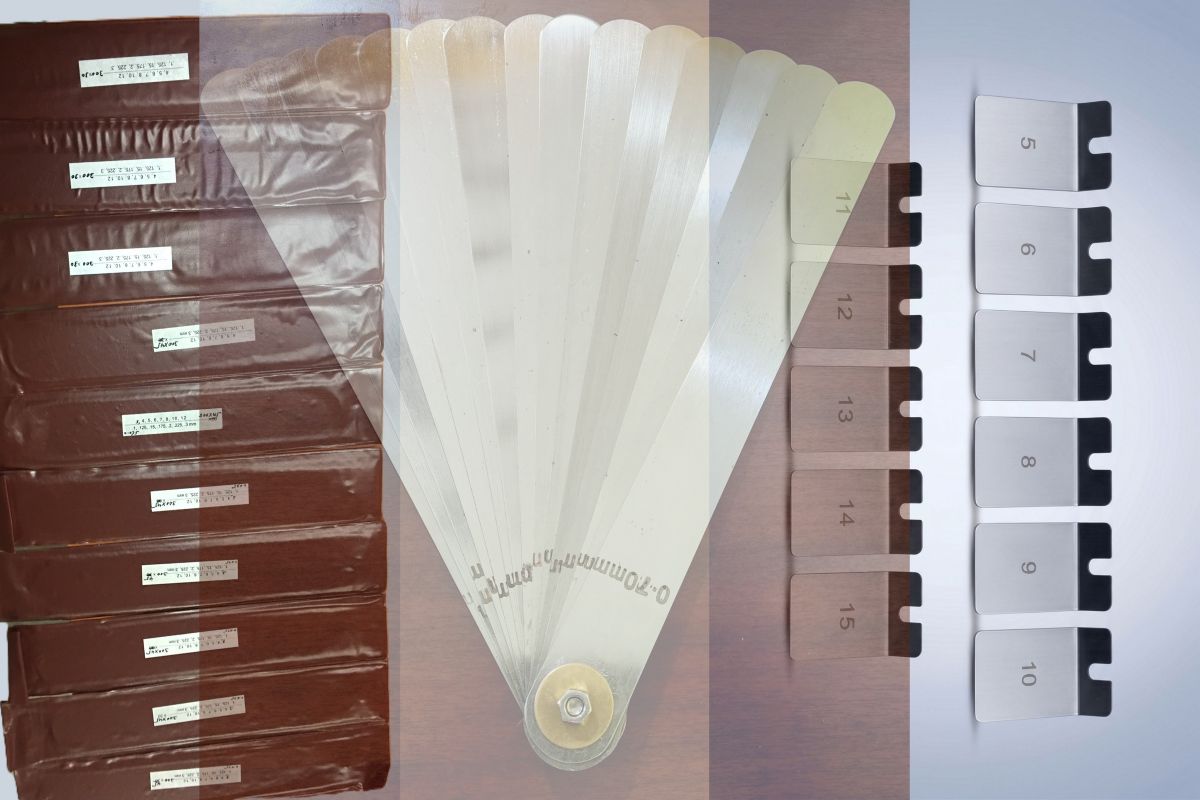
What we supply
- Bladed card setting gauges (e.g. multi-blade flat setting gauges)
- Setting gauges for licker-in and mote knife zones
- Special gauges against sample or drawing for non-standard settings
Application area
Carding maintenance in short-staple spinning. Gauges are used at wire change, after grinding, and during scheduled setting verification. Blade sets are chosen to match the settings actually used by the mill's card models and process, not a generic range.
What Vaamana checks before supply
- Blade thickness accuracy against marked size
- Blade parallelism and edge condition
- Frame rigidity — the gauge must not flex during use
- Marking legibility and blade retention
Information required from the mill
- Card models in use and the settings maintained (flats, licker-in, knives)
- Setting values used, to select the correct blade set
- Preference for individual gauges or multi-blade sets
Common failure symptoms
Mills usually reach this page while investigating one of the following. If any of these match, mention it in your enquiry — it changes what we check first.
- Settings that do not reproduce between fitters using different gauges
- Quality change after re-setting despite 'same' gauge values
- Visible wear, corrosion or bent blades on existing gauges
Frequently asked questions
Why do two gauges reading the same size give different carding results?
Because blade wear and parallelism error make the effective gap differ from the marked size. A worn 10-thou blade may gauge 11–12 thou at the contact line. Gauges should be treated as measuring instruments and verified, not assumed correct because they are marked.
Related products and reading
Send an enquiry
Share your machine make and model, the component position, and the current problem if the enquiry is problem-driven. Specification is confirmed before quoting — that is the point of working with Vaamana.
Request a Technical Quote WhatsApp: +91 70104 83377 sss@vaamanacorp.com vaamanac@gmail.com