
Executive Summary
Flat tops only card well when they are clean. In running production, the foundation area between the wire points steadily collects seed coat fragments, short fibre, husk and microdust — and in polyester and blends, titanium dioxide from the fibre itself. This loading changes how the needles behave long before anything looks dirty from the alley. The result is a family of quality problems that mills routinely blame on wire condition or settings, and try to fix with grinding or adjustment, while the actual cause sits in the foundation. This note describes where the loading occurs, why the usual cleaning methods are inconsistent, and what to check before spending money on wire.
Where Flat Top Loading Occurs
The visible tips of the flat clothing get most of the attention, but the loading that matters accumulates lower down: in the foundation area where the needles are anchored. Deposits that settle here are protected from the working action of the carding zone and from casual cleaning. As the layer builds, it restricts the natural rocking of the needles and gradually changes the effective geometry the cylinder sees. A flat can therefore be "clean" at the tips and already compromised at the foundation.
What Accumulates
- Microdust — the finest fraction, and the most persistent. It packs into the foundation and consolidates under humidity and pressure.
- Seed coat and husk fragments — angular particles that lodge between needle rows and anchor further accumulation.
- Short fibre — bridges between deposits and mats the layer together.
- TiO2 in polyester and blends — the delustrant in the fibre transfers to the flats as a hard, adherent grey-white deposit. It builds faster than cotton dust, bonds harder, and barely responds to air cleaning. Mills moving from cotton to blends often meet foundation loading for the first time this way.
Why Compressed Air and Manual Stripping Are Not Always Consistent
Both methods work — occasionally, and unevenly. Compressed air mostly relocates fine dust rather than removing it: what leaves one flat settles on the next, or on the machine, or in the department air. If the air carries moisture, it can corrode needles while appearing to clean them. Manual stripping depends on who does it, how much time the stop allows, and how consistently every flat gets the same attention; it also consumes labour every single cycle. Neither method touches consolidated foundation deposits or TiO2 well. The practical consequence is a sawtooth pattern: quality recovers after cleaning, drifts as loading rebuilds, and recovers again — and the drift period shortens as the residual layer that cleaning never removes keeps growing.
How Brush and Fillet Action Helps
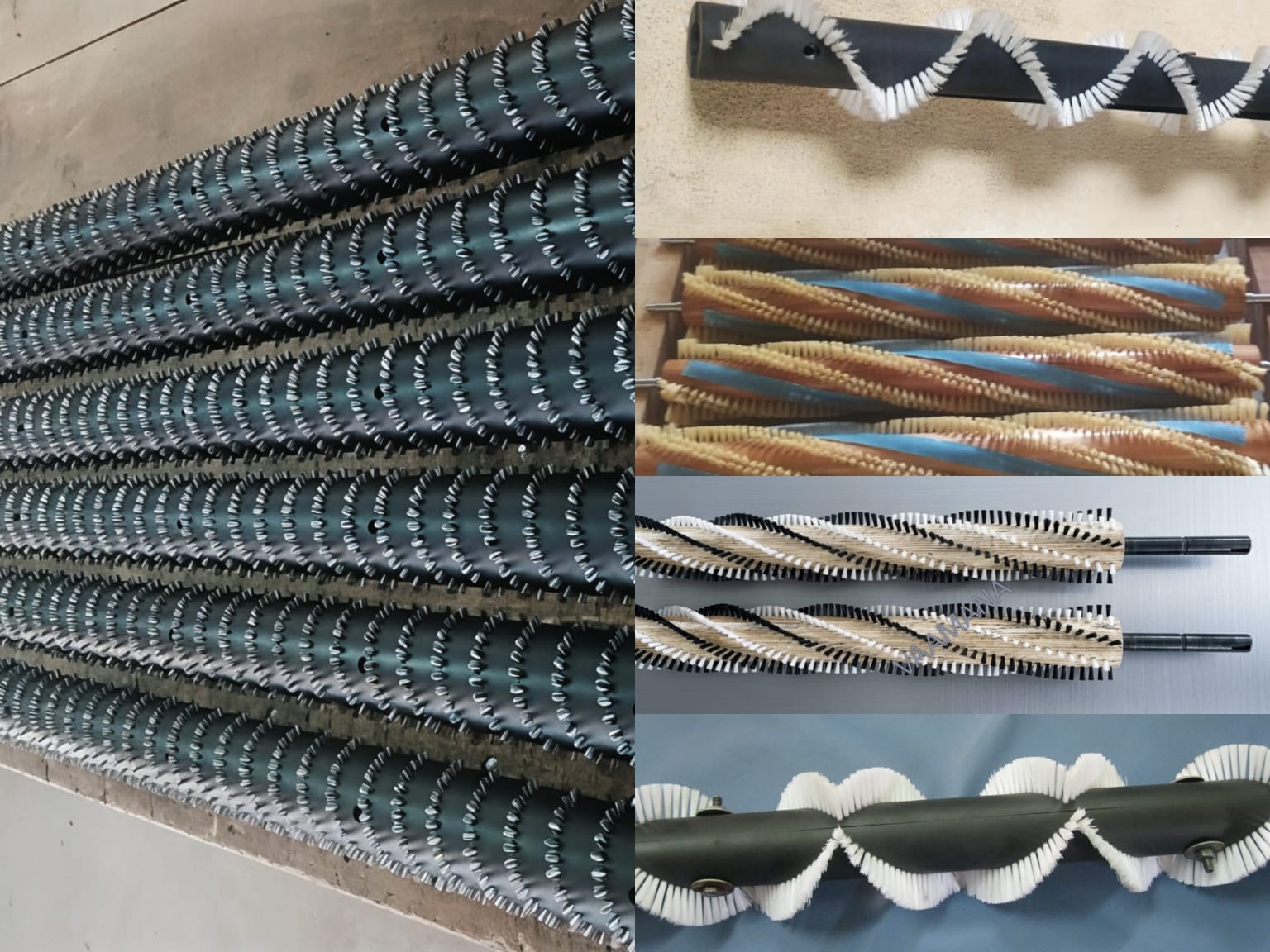
A slow-running spiral brush working at the flat return run does what air and hand-stripping cannot: bristles penetrate the foundation area and lift deposits mechanically, continuously, at the same intensity on every flat, every revolution. Pairing the brush with a cleaning fillet adds a controlled fallback action for harder accumulation. Two design points decide whether this works or causes harm: bristle specification matched to the deposit type, and penetration depth set so the brush works the foundation without touching the wire points. That is why such systems are fitted and set per card model rather than bolted on universally — the approach used in the card flat cleaning system.
Symptoms Mills Wrongly Blame on Wire or Settings
- Nep levels that drift up between cleaning stops and recover after them — read as "wire getting dull", answered with grinding.
- Quality that responds to a flat change but not to a setting change.
- Shortening intervals between grinds while the wire itself measures fine.
- Web cloudiness that cleaning fixes briefly.
- Flat tops wearing out earlier than the specification suggests — loading stresses the needles as well as the process.
Each of these has a wire-shaped and a settings-shaped explanation, which is why the foundation is checked last, if at all. Checking it first is cheaper than grinding on suspicion.
Field Checks Before Deciding Replacement or Conversion
- Pull two or three flats at the next stop and inspect the foundation area under good light — not just the tips. Look for packed grey deposit between needle rows.
- In blends, look specifically for the hard whitish TiO2 layer; scrape a corner gently — if it flakes rather than dusts, air cleaning has no chance.
- Compare a flat from the middle of the set against a recently cleaned one; the difference is the loading rate.
- Plot nep or web-quality data against cleaning stops. A sawtooth that tracks the cleaning cycle points to loading, not wire.
- Check the flat cleaning brush itself: rounded bristle tips or lost density mean the flats return to work partially loaded no matter what the schedule says — brush condition is covered under carding brushes.
What Vaamana Checks Before Supply
For cleaning-system enquiries: card model fit (mounting, drive take-off, clearances), brush and fillet media against the raw material and deposit type, and penetration setting verified at installation. For brush enquiries: bristle material, density and dimensions against the machine model and cleaning duty. Nothing is supplied on model name alone.
What Information the Mill Should Provide
Card make and model, raw material mix (cotton, polyester, blends), current cleaning practice and its frequency, observed loading or the symptoms above, and photos of the flat return zone if the arrangement is non-standard.
Related Products and Services
The card flat cleaning system for continuous foundation cleanliness, and flat cleaning and carding brushes matched to the card model.
FAQ
Is foundation loading visible without pulling flats?
Rarely. Tip-level fibre is visible; foundation deposit generally is not. The behavioural signs — sawtooth quality tracking the cleaning cycle — usually appear before anything can be seen from outside.
Does TiO2 loading affect only 100% polyester?
No. Blends deposit it too, at a rate depending on blend ratio and fibre delustrant level. Any mill running significant polyester content should include the foundation in flat inspection.
Will a cleaning system remove existing hardened deposit?
It prevents far better than it recovers. Heavily consolidated flats should be properly cleaned or serviced first; the system then keeps them in that condition.
![Tops Cleaning System with Rotary Brush [TCS] — Conversions & Upgrades](/media/products/Flat-tops-cleaning-brush.jpg)