Introduction
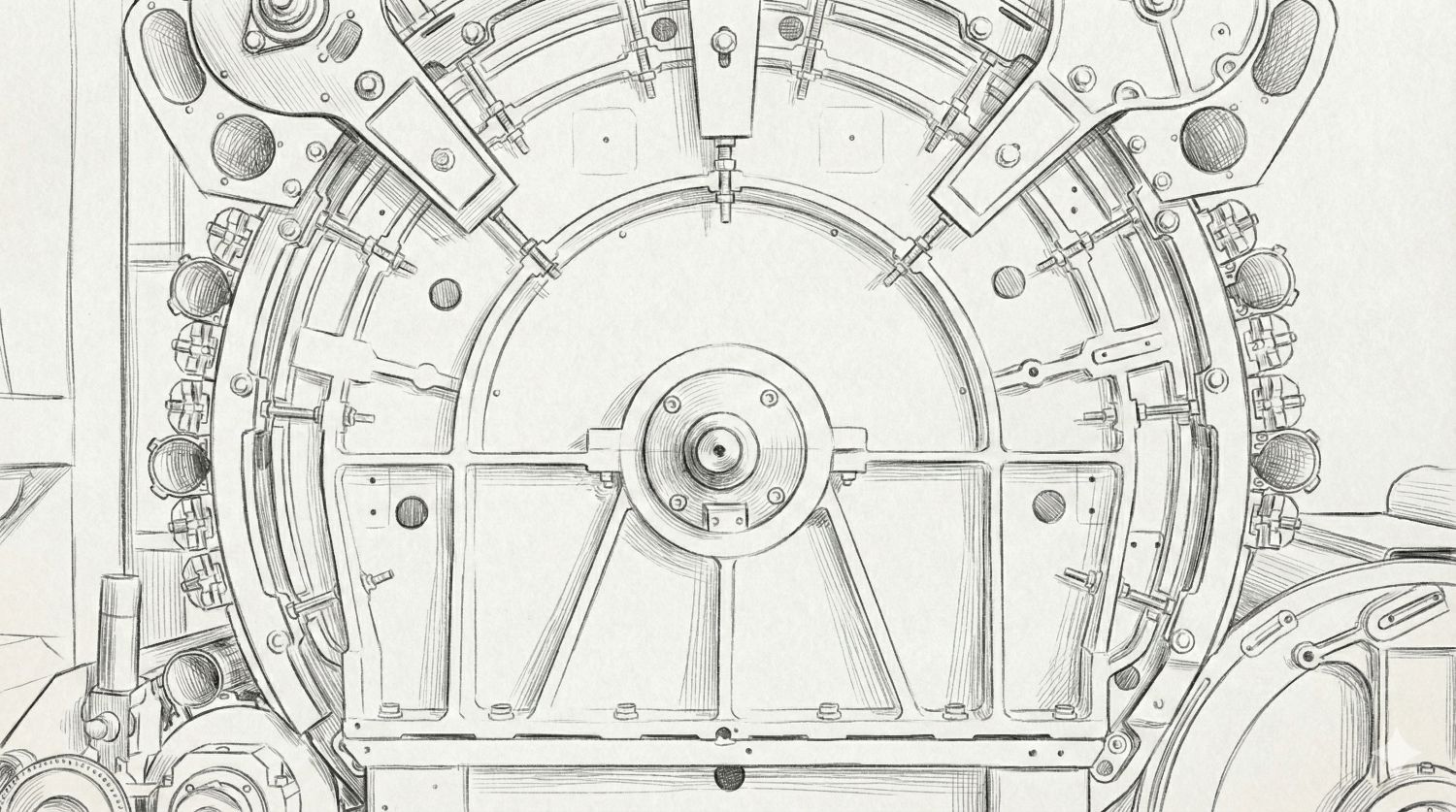
In the carding process, where multiple mechanical elements interact to convert opened fibre into a controlled, uniform web, the function of mote knives is critical yet often underestimated. The Licker-in Mote Knife and the Cylinder Suction Hood Mote Knife(s) play a decisive role in fibre cleanliness, waste control, and downstream yarn quality. When poorly understood or incorrectly set, these components become silent contributors to unintended good fibre loss, nep formation, and process instability.
This note explains their functional roles, engineering parameters, and practical optimisation—moving from principle to mill-floor application.
Part 1: Fundamental Roles & Functions
1. The Licker-in Mote Knife: First-Stage Coarse Cleaning
- Location & Action: Positioned directly beneath the licker-in roller, this stationary knife operates during the initial opening phase. As the licker-in wire separates fibre tufts, centrifugal force and airflow direct heavier impurities (seed coat fragments, sand, stalk particles) and trash-laden fibre clusters toward the knife edge.
- Primary Function: To deflect and eject coarse trash and contaminated fibre clusters into the waste chamber before they reach the main cylinder. It functions primarily as a coarse cleaning and machine-protection element.
- Consequence of Improper Function: Incorrect setting or edge wear allows hard trash to pass forward, where it becomes embedded in the cylinder wire. This accelerates clothing wear, increases cylinder loading, promotes nep formation, and raises maintenance frequency.
2. Cylinder Suction Hood Mote Knives: Sequential Cleaning Stages
- Primary Location (Licker-in to Cylinder Transfer Zone): The first cylinder suction hood and its integrated mote knife operate at the fibre transfer point. This stage captures residual heavy impurities and incompletely opened fibre tufts that bypass the licker-in knife.
- Final Location (Flats Exit to Doffer): The second suction hood and knife system operate after the flats. This stage removes fine dust, loosened trash, micro-neps, and very short fibres released during carding action, ensuring that only a clean, contamination-controlled fibre assembly reaches the doffer.
- Consequence of Improper Function: An improperly set knife at the transfer zone allows trash accumulation on the cylinder wire. At the final position, incorrect setting or edge damage directly increases sliver nep count and yarn imperfections.
Key Takeaway: The licker-in knife performs bulk trash removal; the first cylinder knife provides secondary protection; the final cylinder knife performs fine cleaning and dust extraction. Their combined action protects both machine condition and product quality.
Part 2: Technical Specifications & Precision Engineering
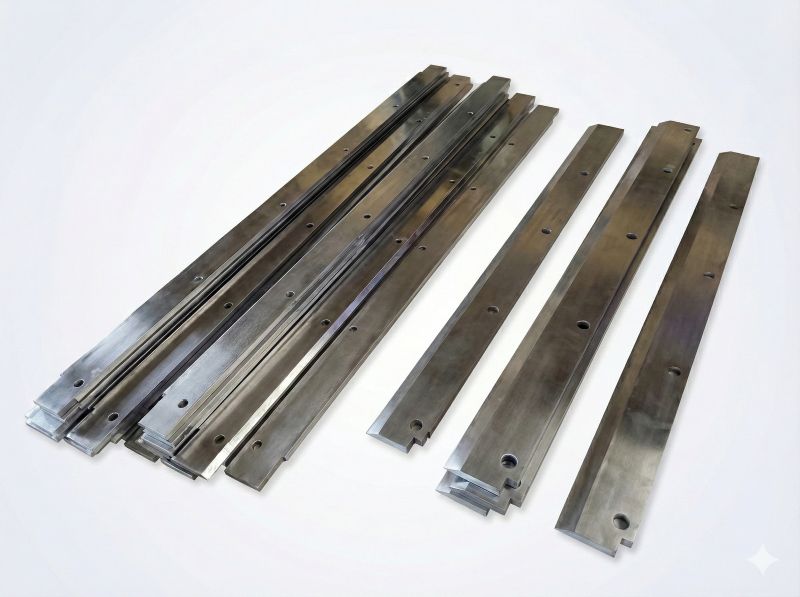
The performance of mote knives is governed by dimensional accuracy, material integrity, and edge geometry. Deviations in any of these parameters compromise the effectiveness of the entire carding system.
| Parameter | Licker-in Mote Knife | Cylinder Suction Hood Mote Knife | Process Impact |
|---|---|---|---|
| Material & Hardness | High-carbon or alloy steel (HRC 58–62), often chrome-plated for abrasion resistance. | Comparable high-grade steel, sometimes with surface treatments to improve fibre release. | Maintains edge stability under abrasive trash and prolonged operating conditions. |
| Edge Geometry | Relatively acute sharpening angle (typically 45°–60°). | Finer, controlled bevel for clean stripping. | Determines separation efficiency without fibre dragging or clothing damage. |
| Dimensional Accuracy | Length, thickness, and hole pattern accuracy are critical. | High straightness and thickness control to ensure uniform working gaps. | Ensures correct mounting and consistent knife-to-wire clearance. |
| Operating Gap | Typically 0.3–0.8 mm from licker-in wire. | Typically 0.1–0.3 mm from cylinder wire. | Primary control parameter balancing cleaning efficiency and fibre loss. |
⚠️ Note on Fit: Hole pattern, PCD, and countersink geometry are non-negotiable. Any mismatch prevents correct mounting and disrupts production. This should be the first verification during replacement.
Beyond Hardness Values: While HRC is an important indicator, long-term performance depends on consistent heat treatment, material homogeneity, and edge finishing quality—particularly in abrasive, high-impact carding environments.
Part 3: Optimisation Insights
Effective mote knife management directly influences key carding performance indicators:
- Waste Control: Knife setting is highly sensitive. Closing the gap improves cleaning but increases good fibre loss; opening the gap reduces waste but allows contamination. Even a 0.1 mm adjustment can produce measurable changes in waste percentage.
- Sliver and Yarn Quality: Correctly set cylinder knives act as effective mechanical nep control elements, contributing to lower imperfection levels in the sliver and downstream yarn.
- Machine Health and Energy: Effective licker-in cleaning reduces cylinder contamination, lowers frictional load, and extends clothing life, directly influencing power consumption and maintenance intervals.
- Waste as a Diagnostic Tool:
- Licker-in Waste: Should predominantly contain hard trash, seed fragments, and coarse tangled fibre.
- Cylinder Hood Waste: Should be light, dusty, and rich in very short fibres.
- Presence of long fibres in licker-in waste indicates an excessively tight setting; long fibres in cylinder waste suggest over-closure or edge damage.
Part 4: Fitment Checks, Wear Symptoms and Inspection Points
Fitment checks before installation
Most mote knife problems that surface weeks after a change were installed with the knife. Before fitting, confirm:
- Straightness along the working length. Sight along the edge or check against a reference flat. A bowed knife cannot hold a uniform gap to the roller, whatever the setting gauge says at the two points where it was measured.
- Edge condition out of the packing. Nicks, handling dents or corrosion spots on a new knife are not cosmetic — each one becomes a local disturbance in waste release.
- Seating faces clean and undamaged. Old fibre, paint or a burr under the mounting face tilts the knife. The edge then sits at a different effective angle than the design intends.
- Fastener condition and torque. A knife that can shift under running vibration will re-set itself — always in the wrong direction.
- The knife matches the position. Licker-in and suction hood knives are not interchangeable even when lengths agree; profile and edge angle differ by position.
Wear symptoms while running
Mote knives rarely fail suddenly. They drift, and the drift shows up in the waste before it shows up on the knife:
- Waste percentage moving in either direction with no raw-material change.
- Spinnable fibre appearing in droppings — the release timing has shifted.
- Waste accumulating unevenly across the working width, pointing to local edge wear or a tilted knife.
- A reflective polish or rounded land visible on the edge under a torch held at a low angle.
Inspection points at maintenance
At every scheduled cleaning or wire maintenance stop, three minutes at the knife zone repay themselves:
- Wipe the edge and check it against light for local wear, nicks and corrosion.
- Verify the setting with a gauge whose blades are themselves trusted — a worn gauge blade turns a correct setting into a wrong one.
- Check mounting fasteners for torque and the knife body for any sign of movement (polished contact marks, fretting dust).
- Record waste percentage by zone at the same stop, so the next comparison has a baseline.
Replacement criteria, supply checks and the information a mill should send with an enquiry are summarised on the carding mote knives page.
Conclusion: Precision as a Working Principle
The licker-in and cylinder mote knives are not passive spares; they are active functional elements within the carding quality system. While specification defines their capability, setting and maintenance determine the outcome.
Consistent yarn quality and stable carding performance depend on correct knife selection, precise installation, and disciplined adjustment guided by waste analysis and process data.
About This Resource
This article is part of Vaamana Corporation’s Carding Knowledge Center, a reference library of engineering notes for spinning professionals. The focus is on practical judgment, process understanding, and execution excellence.
Explore More: Browse related technical notes covering waste management, clothing interaction, and card optimisation strategies.